









Key metrics
0
failures recorded during live operational trials
0
year operational design life
0
smaller footprint, reducing accommodation needs
Across the rail network, you will find level crossings still relying on legacy equipment that is more than 30 years old. Much of this technology was never designed to be easily upgraded or reused.
At Magdalen Road in rural Anglia, Network Rail’s challenge was not just to replace this ageing equipment. It needed a more flexible way to control the crossing, and to understand whether it was possible to move away from bespoke, supplier‑locked signalling systems towards a safer, more open approach that could be scaled across the wider rail network.
Working with Network Rail, Amey delivered the UK’s first live operational trial of Tessera, its award-winning open digital signalling solution. Tessera is built around a HIMA HIMatrix SIL 4 programmable logic controller, a computer‑based system meeting the highest safety standards.
The technology is already used in other safety‑critical industries, including nuclear, chemical and process sectors. At Magdalen Road, it was applied for the first time on the UK rail network to control a Manually Controlled Barrier level crossing in live service.
At a glance
- Working with Network Rail, Amey delivered the UK’s first live operational trial of Tessera, its open digital signalling solution.
- The trial gave Network Rail a real-world test of commercially off-the-shelf (COTS) signalling technology, demonstrating a lower-cost, lower-carbon alternative to proprietary equipment while meeting stringent safety requirements.
- Full Network Rail approval followed live trials, electromagnetic compatibility testing and safety case development, confirming compatibility with existing railway equipment.
- A modular, configurable design allows components to be reused on future level crossing renewals. A smaller footprint and lower power demand also support more sustainable operation, including use with renewable or off‑grid power.
- Tessera seamlessly integrates with existing signalling and legacy infrastructure, reducing renewal complexity while creating a future-ready platform for European Train Control System (ETCS) rollout and the wider digital railway.
Modernising a critical level crossing without disrupting live rail operations
For Network Rail, renewing a level crossing is never a simple swap. Trains still need to run, the crossing must continue to operate safely, and there is little tolerance for disruption or uncertainty.
At Magdalen Road, the control system had been in operation for decades. It relied on electro-mechanical technology with hardwired relay-based logic circuits. Changes were difficult to make, documentation was paper based, and fault investigation often depended on specialist knowledge rather than clear diagnostics. Each intervention carried time, cost and an operational risk.
This was not just a local issue. Across the network, many level crossings are renewed as one-off designs using older relay-based technology or outdated proprietary systems tied to specific suppliers. While safe, this approach limits competition and makes it hard to reuse solutions elsewhere. Over time, it drives up cost and complexity and slows the pace of modernisation.
Network Rail wanted to break that pattern, but only if it could be done safely in a live operation.
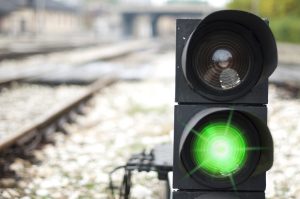
Delivering a safe digital signalling upgrade as a trusted rail infrastructure partner to Network Rail
Although the solution was new to the UK rail signalling environment, Tessera was built on a safety-critical controller already proven in similar computer-based control systems at hundreds of sites worldwide, including level crossings on other rail networks.
With the balance finely set between innovation and safety, Amey worked with Network Rail to test whether that proven technology could be applied safely in the UK. The focus was on demonstrating reliability and practicality in a live operation before considering wider use.
Rather than delivering a one-off fix at Magdalen Road, the approach tested whether the same modular and standardised method could be repeated and supported over the long term.
Here’s how that approach came together in practice:
- Product development and safety assurance focused on adapting Tessera for UK rail use, supported by early agreement from independent assessors that the system could operate safely. These included Aegis Certification in their ISA and AsBo roles, helping to simplify later approvals.
- A modular, open digital design was then developed using reusable building blocks and documentation already familiar to UK signalling teams.
- Rigorous testing and compatibility checks were completed before live use, including a full prototype installation and simulation using Amey’s xCATS facility. This was followed by laboratory and electromagnetic compatibility testing at Amey’s Crewe facility.
- Maintenance, training and integration were developed for Network Rail Maintainers, with diagnostics integrated into intelligent infrastructure systems to improve fault‑finding and reduce reliance on specialist knowledge.
From a successful live trial to a repeatable model for rail upgrades across the UK
The Magdalen Road trial demonstrated that Tessera can operate safely and reliably in live UK rail conditions.
From a safety and assurance perspective, the results were clear:
- The system ran fault‑free throughout live operation, with zero failures recorded, giving Network Rail confidence in both the technology and its assurance.
- Full product acceptance for the programmable logic controller was granted in March 2023, with a further enhancement approved in July 2024.
- The trial confirmed that modern digital control can operate alongside trackside assets more than 30 years old, protecting existing infrastructure rather than forcing wholesale replacement.
Benefits were also realised in day‑to‑day operation and maintenance:
- Clearer diagnostics improved fault‑finding and reduced reliance on specialist knowledge.
- Standard logic blocks shortened the time needed to design, test and deliver future sites, supporting a more repeatable and efficient delivery approach.
- Moving away from proprietary systems opened the market to greater competition, rather than locking future renewals into a single supplier.
- A smaller physical footprint and lower power demand reduce energy use and support alternative power options such as solar or wind.
- Over time, the approach also creates opportunities to simplify infrastructure further, including potential future reductions in cabling, subject to wider system integration and approval.
Most importantly, the trial delivered a strategic shift.
Instead of treating each level crossing as a one‑off design, Network Rail now has a proven, repeatable model that can be adapted and reused across the network. The work at Magdalen Road showed this could be achieved through investment in a standard modular solution, rather than repeated bespoke design on every scheme.
The wider relevance of this approach has been recognised by the industry, including a Rail Business Awards win for digital innovation. The trial established Tessera as a scalable, future‑ready digital alternative for UK signalling, positioning Amey as a trusted partner in the move towards more open and internationally proven rail technology.
Testimonial
"The Amey solution is straightforward to install and maintain, offering enhanced reliability and safety. It interfaces seamlessly with our intelligent infrastructure system, providing us with improved maintenance information.”