









Key metrics
9
transformers delivered through Norfolk
81
metre maximum convoy length
45
miles travelled from port to substation
Overview
When a new electricity substation south of Norwich needed to receive a series of large electrical transformers manufactured in Japan, the challenge extended far beyond transporting equipment from port to site.
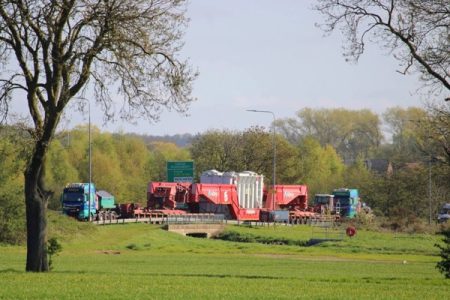
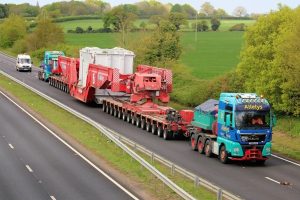
Each transformer had to travel 45 miles from King’s Lynn through Norfolk’s road network on an abnormal-load convoy stretching up to 81 metres in length.
Logistics specialist Allelys was responsible for transporting the transformers and appointed Amey to deliver the route modifications and operational support needed to make each journey possible. As Norfolk County Council’s street lighting Private Finance Initiative (PFI) contractor, we brought detailed knowledge of the county’s lighting assets and highways infrastructure to the project. Without these interventions, the convoys could not leave the port and reach their destination.
From initial planning in 2025 through to the final deliveries in 2026, we combined asset management expertise, route planning and live convoy support to help deliver one of the most complex abnormal-load movements undertaken in Norfolk.
At a glance
- Amey supported the delivery of nine large electrical transformers from King's Lynn Port to a new electricity substation south of Norwich, helping enable critical energy infrastructure works.
- Each transformer travelled 45 miles through Norfolk on abnormal-load convoys measuring up to 81 metres in length, passing through constrained roads, roundabouts, roadworks and public transport corridors.
- Drawing on our role as Norfolk County Council's street lighting PFI contractor, we identified and addressed infrastructure constraints that would otherwise have prevented the movements from taking place.
- We developed quick-release methods for selected sign posts and semi-permanently relocated street lighting columns to support multiple vehicle movements safely and efficiently.
- Working alongside Allelys, Norfolk County Council and Norfolk Police, we established a repeatable delivery process that enabled all nine transformer movements to be completed successfully.
Enabling oversized loads through constrained highways infrastructure
Moving an 81-metre abnormal load through Norfolk’s road network required extensive planning. The route from King’s Lynn to the new substation passed through narrow roads, roundabouts, traffic management systems and multiple infrastructure pinch points.
At several locations, signs, bollards, street lighting columns and other roadside assets physically obstructed the swept path required by the convoy. Without infrastructure modifications and operational support, the route was not passable.
The challenge extended beyond a single journey. Nine transformer movements were scheduled over several months, meaning the route had to be prepared repeatedly while maintaining network safety and operational control for every convoy movement.
Designing a repeatable solution for every convoy
We became involved during the early planning phase, working with our client, Allelys, alongside Norfolk County Council and Norfolk Police to develop a detailed scope of works and route strategy.
Rather than repeatedly removing and reinstating the same assets for every convoy, we implemented a combination of semi-permanent street lighting column relocations and modified sign-post arrangements to support the full delivery programme.
Our work included:
- Identifying signs, bollards, lighting columns and roadside assets that conflicted with the swept path of the transformers.
- Semi-permanently relocating selected street lighting columns at critical pinch points to avoid repeated removal and reinstatement during each movement.
- Installing quick-release methods for selected sign posts, allowing them to be disconnected, removed and reinstated in approximately five minutes.
- Supporting route inspections and pre-delivery checks before each convoy movement.
- Providing live operational support throughout every transformer journey.
Each convoy began before dawn. From 4am, our teams mobilised ahead of the transformers to remove selected sign posts, bollards and temporary obstructions before reinstating them immediately after the load had passed.
Street lighting columns at critical pinch points had already been relocated on a semi-permanent basis to accommodate the transformer movements.
Safe, repeatable delivery of abnormal-load movements
The programme created a proven process for moving oversized electrical transformers through Norfolk’s highway network while providing a reliable route for every convoy and minimising disruption.
Key outcomes included:
- 9 successful transformer movements: all transformers reached the new substation safely and efficiently.
- Semi-permanent street lighting column relocations: Moving columns away from critical pinch points reduced the need for repeated interventions throughout the programme. The columns will be returned to their original locations after the final load movement.
- Five-minute sign post removals: Quick release methods for selected sign posts improved operational efficiency and reduced disruption to the highway network.
- Proactive route management: Enabled the safe movement of oversized loads through live roads, roundabouts and constrained urban environments.
The benefits of the project extended beyond the transport operation itself. By enabling the delivery of these critical transformers, we supported infrastructure that will help strengthen the UK’s electricity network.
The programme also demonstrated how our Norfolk Street Lighting team’s expertise could be applied to complex logistics challenges. The capability developed through the transformer programme has since been used to support additional abnormal-load movements elsewhere in the county.
Testimonials
“Moving 9 transformers of this size through Norfolk required certainty that the route would be ready for every journey. Amey brought detailed knowledge of the county’s street lighting and highways assets, developed practical solutions at key pinch points and provided operational support during each movement. Their preparation and responsive approach played an important role in helping us complete the programme safely and efficiently.”
“With so many moving parts to coordinate and the sheer size of the transformer itself, the first movement was naturally nerve-racking. Thanks to the team’s preparation, everything went exactly to plan and that gave us a strong foundation for the deliveries that followed.”