





Key metrics
0
structure kilometres delivered during Easter
0
structure kilometres delivered during the 9-day blockade
0
safety incidents during blockade delivery
When Network Rail planned two critical access windows at Lancaster – the Easter blockade and a subsequent nine-day blockade – it needed a delivery partner that could maximise productivity while maintaining safety and ensuring a reliable return to service.
Working within one of the UK’s busiest rail regions, every possession hour mattered and every hand-back carried consequences for operators and passengers.
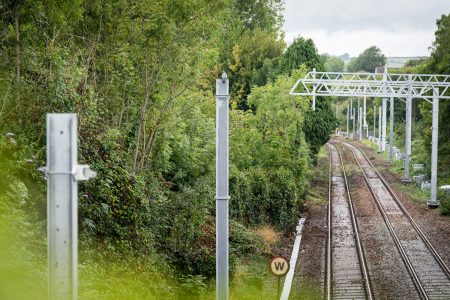
This is where Amey came in. We delivered overhead line equipment (OLE) and associated enhancement works across both blockade periods. By combining early planning, integrated leadership and close collaboration with Network Rail and our supply chain partners, we completed high-volume outputs safely and to programme. The work strengthened asset reliability, supported planned network recovery and demonstrated how a coordinated delivery team can manage complexity while protecting performance on a live railway.
At a glance
- Amey delivered major overhead line equipment (OLE) and railway enhancement works for Network Rail during Easter and extended nine-day blockade periods at Lancaster.
- Working within tightly controlled possession windows, we maximised available access time while maintaining focus on reliable hand-back and network performance.
- We aligned Network Rail, delivery teams and supply chain partners through a single coordinated programme, helping manage complex interfaces and keep delivery on track.
- The programme achieved high-volume OLE outputs within compressed timescales, demonstrating strong operational control in a challenging railway environment.
- The completed works strengthened asset reliability and were recognised by Network Rail as a benchmark example of partnership-led delivery.
Delivering change without disrupting the railway
Lancaster sits on a busy part of the rail network where access to infrastructure is limited and disruption can have immediate consequences for operators and passengers. Every possession window needed to be used effectively, while ensuring the railway could return to service safely and on schedule.
Network Rail needed us to deliver overhead line equipment (OLE) and associated enhancement works across two critical blockade periods: the Easter blockade and a subsequent nine-day blockade. These were fixed opportunities to carry out a significant volume of work, leaving little flexibility if activities fell behind programme.
The challenge was not simply completing the planned works. Multiple teams would be working in a constrained environment, with operational interfaces to manage and limited time available. At the same time, the completed infrastructure needed to support long-term asset reliability and network performance. We therefore needed a delivery model that could maximise productivity while maintaining control of safety, quality and hand-back throughout both blockade periods.
Creating one programme, not separate possessions
We led delivery through a single integrated approach that treated the Easter and nine-day blockades as part of one coordinated programme rather than two independent possessions. This gave everyone involved a shared understanding of priorities, risks and delivery outcomes from the outset.
Working closely with Network Rail’s route, operations and capital delivery teams, we focused on creating clear accountability and maintaining visibility of progress throughout the programme. This enabled decisions to be made quickly and helped teams respond effectively as work progressed.
Four elements underpinned delivery:
- Early planning and readiness aligned possession strategy, work sequencing and delivery priorities before access windows began.
- Integrated leadership brought together Amey, Network Rail and supply chain teams, ensuring decisions remained visible and aligned with programme objectives.
- Disciplined site control helped manage multiple work fronts and operational interfaces while maintaining delivery momentum.
- A consistent focus on safety and asset reliability ensured progress was achieved without compromising long-term infrastructure performance.
By maintaining a single programme view throughout both blockade periods, we reduced delivery risk, protected hand-back commitments and kept the focus on achieving reliable outcomes for the client and rail network.
High-volume delivery with reliable hand-back
The coordinated approach enabled us to complete both blockade periods safely and to plan, delivering significant volumes of OLE work while supporting the railway’s return to service as scheduled. The programme demonstrated how strong collaboration and disciplined operational control can maximise value from limited access opportunities.
- 4 Structure Kilometres delivered during the Easter blockade, helping maximise productivity during a tightly constrained access period.
- 6 Structure Kilometres delivered during the nine-day blockade, enabling substantial progress to be made within a fixed possession window.
- Reliable programme control supported planned hand-back, helping the network return to service as intended following both blockades.
- Coordinated delivery reduced operational risk, allowing multiple teams to work effectively within a complex rail environment.
- Improved infrastructure supports asset reliability, helping reduce future performance risk across the route.
Beyond the outputs delivered during the possessions, the programme demonstrated the value of partnership-led delivery. By bringing together Network Rail, delivery teams and supply chain partners behind a shared plan, we combined high-volume outputs with strong operational control. The result was more reliable infrastructure, confidence in hand-back and a delivery model that Network Rail recognised as a benchmark example of collaborative blockade delivery.
Testimonial
"This was a benchmark performance and an excellent example of leading delivery through strong partnerships."