








Overview
A railway can be delivered successfully and still not be ready to operate. That may sound counterintuitive, but it exposes one of the most important challenges facing major infrastructure programmes. Completing an infrastructure project and ensuring it is operationally ready from day one are not the same thing.
Major programmes are typically measured against visible delivery milestones: infrastructure installed, systems tested and construction completed. But true success is determined by what happens next. Infrastructure must be safe and efficient to operate, practical to maintain and supported by the people, information and processes needed to keep it performing.
Operational readiness is what turns engineering delivery into operational performance. It requires infrastructure, technology, data, operations and people to work together as one system, and that thinking must be embedded throughout delivery rather than left until handover.
This matters far beyond rail. Across transport, energy, water and defence, organisations are introducing increasingly complex change into live operational environments while maintaining the services people depend on.
From delivering the right operational outcome to integrating complex systems and preparing the people who will ultimately run them, three lessons are critical to getting operational readiness right.
Lesson 1: starting with the operational end-state
The strongest programmes start with understanding the operational railway they need to deliver, not just the assets required. This changes the questions asked at the beginning. Instead of focusing only on what must be built, project delivery teams should first establish what the railway needs to be capable of doing. How will services operate normally and under certain conditions? How will the assets be maintained? What information and skills will teams require? How can the change be introduced without causing unacceptable disruption? These questions should shape requirements, design choices, programme sequencing and operational planning from the outset.
Too often, difficulties encountered during commissioning or entry into service can be traced back to decisions made much earlier. Operational requirements may not have been fully understood. Interfaces may have been considered separately rather than as part of a connected system. Operators and maintenance teams may have been brought into the programme after the most important decisions had already been made. There are simply too many unaddressed factors from early on that can rear their heads later on down the line. The caution is simple. If projects assume operational understanding or leave operational questions until the end, they risk discovering that technically complete assets do not fully support the railway’s operating reality. Readiness is the result of key decisions made throughout the programme lifecycle involving all stakeholders. It cannot be added through a final checklist.
Lesson 2: systems engineering is the deciding factor
For instance, electrification is sometimes viewed primarily as an infrastructure programme involving power supply and overhead equipment. In reality, it is a systems integration challenge. Power, track, signalling, rolling stock, telecommunications, stations, depots, maintenance arrangements and operating procedures must all work together. That’s because a decision taken in one area may create an operational consequence elsewhere.
This is where systems engineering comes into the fold. It provides a structured way to understand and manage the complexity, uncertainty and risk inherent in major infrastructure programmes. It helps project teams understand the outcomes to be achieved, define the outputs necessary for success, identify dependencies and manage stakeholders. By recognising that infrastructure is a complex system of assets, operations, maintenance and users, it enables teams to make better decisions that balance technical requirements, operational capability and whole-life value.
The value of systems engineering is increasingly being recognised across the rail industry. As networks become more connected and programmes more complex, there is growing need to ensure that infrastructure, technology, operations and people are considered as part of a single, integrated system. This mindset is critical in achieving operational readiness, helping organisations plan and manage the right first-time introduction of new capabilities into the operational railway.
The key point here is that integration cannot be left until testing and commissioning. By that stage, many of the decisions that will determine operational performance have already been made. The INCOSE Systems Engineering Handbook notes that effective application of Systems Engineering can reduce project risk by around 12-15% at each stage of development, helping to create greater certainty in outcomes, cost and programme. Achieving this requires Systems Engineering to be embedded from the earliest stages of project definition and carried through design, assurance and delivery. It is not a technical coordination task, but a core delivery discipline that underpins successful project outcomes.
Lesson 3: people complete the readiness picture
A railway is only truly ready when the people who will operate and maintain it are ready too. In practice, every choice made during design, construction and commissioning influences how the railway will ultimately perform. The challenge is not simply to deliver infrastructure, but to ensure that the needs of those who will operate, maintain and manage it are quantified and understood. This includes ensuring they have the information, capabilities, resources and confidence needed from day one.
That means involving operators and maintenance teams early enough to influence project decisions, and not introducing them once those decisions have already been made. This is particularly important as part of understanding how the railway will be operated and maintained. Very often, the more subtle needs simply cannot be identified or understood from an outside perspective, and the value gained from first-hand operational and maintenance experience cannot be replicated. Operational readiness is built through continuous collaboration and shared ownership across the project lifecycle. It cannot simply be transferred across a contractual boundary at handover.
Designing for operational confidence
The transformation of the Core Valley Lines in South Wales illustrates what it means to design and deliver a railway as a complete system. The programme combined electrification, new rolling stock, signalling, telecommunications, a new control centre and depot across an ageing network constrained by low bridges, tunnels, canopies and listed structures. The solution was built around the combination of new battery hybrid trains, discontinuous electrification, novel track to train communication technology and new Automatic Power Changeover (APCO) working methods to overcome infrastructure constraints.
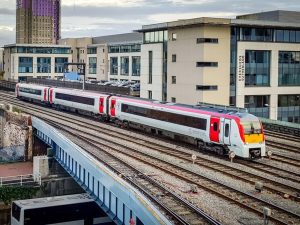
Upfront investment in developing how the transformed railway would operate in both normal and degraded modes, how it would recover from disruptions and how it would be maintained was critical to ensure the transformed railway was ready for operations when planned. Systems engineering was a core theme throughout the programme. It provided a framework for identifying and controlling dependencies across both the solution and its stakeholders. This enabled the overall railway system configuration to be managed effectively, while also providing a clear understanding of system maturity and operational readiness. The operations team and the Infrastructure managers came together with the transformation team to form a joint team focused on ensuring an integrated, operationally ready solution was arrived at, ensuring the people affected were included in the decisions and all points of view were heard.
The key lesson here is that successful projects are not the result of physical completion. Assets must be understood, systems proven in their operational environment and handover supported by clear ownership, reliable information and prepared people. Effective projects understand the operational outcomes they need to deliver, treat infrastructure, technology and people as interdependent parts of one system, and make system-based decisions informed by data. Asset delivery is a milestone. Operational readiness enables project success.